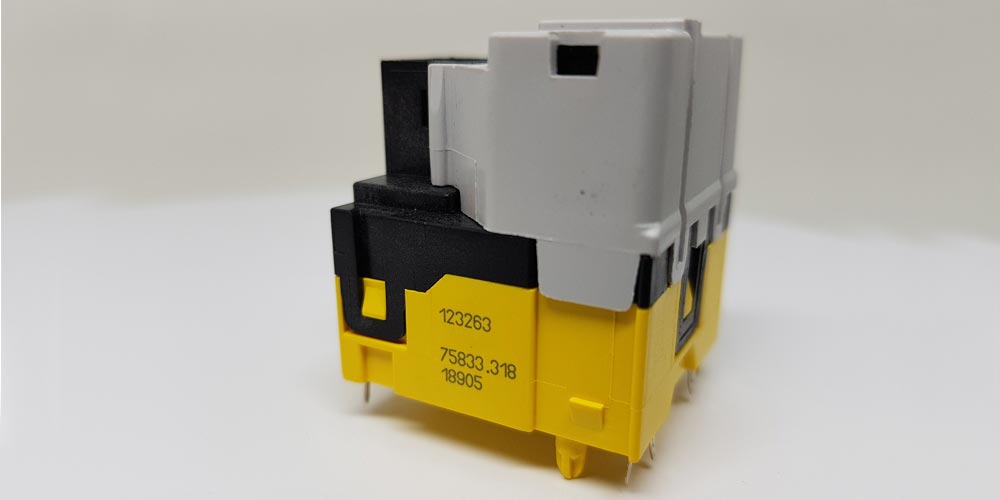

Laser marking on plastic is an essential technology for many companies, particularly in the medical , automotive , cosmetics , and food packaging sectors . The need to code, track, personalize, or make plastic products identifiable has become a priority, not only for regulatory reasons , but also to improve company competitiveness.
However, there is no “universal laser” for all plastics: unlike metals, plastics exhibit a remarkable variety of chemical compositions, colors, thermal behaviors, and degrees of transparency . Each material reacts differently to laser irradiation, making the choice of source and operating parameters a critical step.
For this reason our discussion will be divided into 3 sections:
We will start by analyzing the types of plastics, then we will look at the laser sources one by one, and finally we will compare laser marking with "traditional" marking to highlight its advantages and specific fields of application.
Chapter 1: Types of plastics: characteristics, problems and solutions
Not all plastics behave the same way during the laser marking process . Some absorb the beam well and produce sharp , high-contrast markings . Others, however, require specific measures , such as the addition of additives or the use of particular wavelengths. It is therefore important to understand that plastic is not a generic material, but a composite universe of polymers with very different mechanical, chemical, and optical properties . Depending on the production and the type of plastic to be marked, a suitable laser marker must be chosen.

Marking on ABS plastic (Acrylonitrile Butadiene Styrene)
Sectors of use: Automotive, consumer electronics, household appliances, technical components.
Characteristics: ABS is a rigid, impact-resistant plastic with good processability. However, it has low thermal stability and a surface that tends to melt quickly when heated.
Problems when marking on ABS plastic:
- Surface fusion that makes the writing poorly defined.
- Low contrast of the marking, especially on the light or neutral versions.
- Possible local deformation if power is excessive.
Recommended solutions:
- UV DPSS lasers working at low wavelengths (355 nm) allow for “cold” marking, minimising the thermal effect.
- Fine tuning of pulse duration and focus.
Marking on Polypropylene (PP) plastic
Sectors of use: Food packaging, cosmetics, household goods, medical components, caps and containers.
Features: Polypropylene is inexpensive, lightweight, and highly resistant to chemicals. However, it has very low laser beam absorption, especially in its natural form (white or transparent).
Marking problems:
- Invisible or extremely weak marking.
- Possible swelling or rippling effect due to surface melting.
- Low contrast adhesion.
Recommended solutions for marking on Polypropylene plastic:
- Use of laser-markable additives incorporated into the polymer, which react specifically to the laser, allowing for sharp, high-contrast marking.
- High-precision DPSS UV lasers that promote surface absorption.
Polycarbonate (PC) plastic marking
Sectors of use: Optics, security devices, electronics, medical.
Features: Polycarbonate is known for its clarity and impact resistance, but it is very sensitive to heat and stress cracking.
Problems in marking polycarbonate plastic:
- Local yellowing due to heat accumulation.
- Microcracks that can weaken the piece over time.
- Marking often not uniform.
Recommended solutions:
- Use of MOPA laser, which allow fine modulation of the duration and intensity of the pulses, avoiding thermal accumulations.
- Choice of high frequencies and low power, with very precise focusing.
Additional note: For medical applications , it is essential to ensure that the marking does not release microparticles or contaminating residues . In this case, the laser must operate under perfectly controlled conditions.
Nylon plastic marking (PA6, PA66, PA12, etc.)
Sectors of use: Mechanical, textile, automotive, components.
Characteristics: Nylon is a durable polyamide, but it is hygroscopic (it absorbs moisture) and can easily deform due to heat. Reinforced versions (with glass or carbon fiber) react differently.
Marking problems:
- Thermal deformations if the laser is not calibrated correctly.
- Low contrast and dull markings.
- Variability of results depending on the humidity level absorbed by the piece.
Recommended solutions in Nylon plastic marking:
- Fiber or UV lasers, optimized for short pulses and low intensity.
- In the case of reinforced nylon, it is important to test the laser behavior on the specific sample beforehand.
Practical advice: Avoid using CO₂ lasers, which are too aggressive for nylon. It's better to opt for lasers with high parametric control.
Black or additive-based plastics
Sectors of use: Electronic devices, packaging, design components.
Features : Black plastics are very popular because they offer good absorption of laser light, but the risk is carbonization or a burning effect if the power is not dosed correctly.
Marking problems:
- Formation of irregular edges and charred halos.
- “Burnt” effect on shiny surfaces.
- Contrast varies depending on the type of black (organic dye or carbon black).
Recommended solutions:
- MOPA or ultra-short pulse lasers, which allow for very fine adjustments and uniform results.
- Testing on sample materials to avoid surprises in series production.
Other technical polymers
- POM (Polyoxymethylene): A very hard material and difficult to mark. It requires high power and extreme precision.
- PVC (Polyvinyl chloride): Generates toxic gases when laser-etched; avoid or handle in aspirated and confined spaces.
- PET (Polyethylene terephthalate): Used in packaging. Marking is possible but requires UV laser to avoid damaging the thin plastic film.

Summary table of combinations between plastic type and recommended laser
| Type of plastic | Sectors of use | Main problems | Recommended laser |
|---|---|---|---|
| ABS (Acrylonitrile Butadiene Styrene) | Automotive, electronics, household appliances | Low contrast, blending, deformation | UV Laser or DPSS |
| PP (Polypropylene) | Food, medical, household, and cosmetic packaging | Weak marking, swelling, low absorption | UV laser with additives |
| PC (Polycarbonate) | Optics, electronics, security, cosmetics | Yellowing, micro-cracks | MOPA Laser |
| Nylon (PA6, PA66, PA12) | Mechanics, textiles, automotive | Thermal deformation, low contrast | Fiber Laser or UV |
| Black plastics (additive) | Electronics, packaging, design, cosmetics | Burning effect, irregular edges | MOPA laser or ultrashort pulses |
| POM (Polyoxymethylene) | Precision engineering components | High hardness, difficult to mark | High-power laser |
| PVC (Polyvinyl chloride) | Construction, wiring, industrial | Release of toxic gases | Only in aspirated environments |
| PET (Polyethylene terephthalate) | Food and cosmetic packaging | Thin film, risk of damage | Low intensity UV laser |
Understanding how each plastic material reacts to laser marking is an essential step for anyone designing or upgrading their production line . The most common mistake is to believe that a single laser system can work for all plastics without distinction. In reality, it is essential to select the right technology based on the polymer , sometimes even choosing “laser-friendly” materials during the product design phase.

Chapter 2: The main laser markers for plastic: let's discover the laser sources
Each laser source has specific characteristics in terms of wavelength , pulse duration , generation mode , and beam quality . These parameters determine the effectiveness , precision , and compatibility of the laser marking system with different types of polymers.
Choosing the right source isn't just a technical issue: it translates into reduced production times, guaranteed code readability , reduced waste , and compliance with industry standards . Let's now take a detailed look at the main laser markers for plastic.
UV laser (Ultraviolet – 355 nm)
Key Features:
- It works at a very short wavelength (355 nanometers).
- It is a “cold” source: it produces less heat than infrared lasers.
- Ideal for very high precision surface engravings.
Advantages:
- Perfect for clear, translucent or hard-to-mark plastics.
- Avoids deformations or burns even on sensitive materials.
- Extremely high-definition graphics: texts, logos, microcharacters, QR codes.
Recommended applications:
- Medical sector (blisters, needles, disposable devices).
- Food packaging (film, caps, capsules).
- Precision electronics.
- Cosmetic.
Laser MOPA (Master Oscillator Power Amplifier) 1080nm
Key Features:
- Based on fiber technology, but with pulse duration and frequency that can be modulated.
- It offers extreme flexibility in adjusting parameters.
Advantages:
- Suitable for dark and colored plastics, including materials with additives.
- Capable of generating grayscales, useful for logos and aesthetic markings.
- Reduces the risk of carbonization thanks to short pulses.
Recommended applications:
- Automotive: ABS, PA, PP components.
- Industrial design: graphic customizations.
- Serial traceability on dark or reflective surfaces.
- Cosmetic.
Fiber Laser (1080nm)
Key Features:
- It operates at a near-infrared wavelength (1080 nm).
- It is the most widespread and versatile technology for industrial applications.
Advantages:
- Suitable for dark, filled or additive-containing plastics.
- High marking speed → excellent for mass production.
- Low operating costs and long system life.
Recommended applications:
- Technical components (electronics, mechanics, connectors).
- Consumer products in ABS, PBT, filled PE.
- Marking of logos, codes, safety symbols.

DPSS Laser (Diode Pumped Solid State)
Key Features:
- Solid state diode-pumped laser source, which can operate at various wavelengths: typically 1064 nm, but also 532 nm (green) or 355 nm (UV).
- It combines optical precision and good peak power.
Advantages:
- Very precise markings on small areas.
- Good versatility if you choose alternative wavelengths (green or UV).
- Suitable for sensitive materials and high density details.
Recommended applications:
- Medical and pharmaceutical.
- Electronic components where extreme precision is required.
- Optical and technical instruments.
PICO, NANO and FEMTO second (ultrashort pulse) lasers
Key Features:
- New generation sources that emit very short pulses: picoseconds (10⁻¹² s) or femtoseconds (10⁻¹⁵ s).
- They act without significant heat, completely avoiding thermal deformations.
Advantages:
- Maximum precision: “cold” and clean marking, even on thermally unstable plastics.
- Ideal for micrometric and complex surface engravings.
- No alteration of the material: useful in critical sectors.
Recommended applications:
- Microelectronics, medical devices, precision components.
- High-end aesthetic design.
- Marking on very thin or multilayer plastics.

Summary table of features and benefits for each type of laser
| Laser type | Main features | Benefits | Recommended applications |
|---|---|---|---|
| UV laser (355nm) |
Cold source, high precision, no heat spread | Ideal for light and sensitive plastics, micrometric incisions, without deformations | Medical, food packaging, fine electronics |
| MOPA Laser | Modulated fiber, flexible pulses, advanced regulation | Excellent on dark/additive plastics, aesthetic markings, grayscale | Automotive, industrial design, serial traceability |
| Fiber Laser (1080nm) |
Versatile, infrared, high productivity | Speed, durability, suitable for dark and loaded plastics | Technical components, electronics, consumer goods |
| DPSS Laser | Solid state diode pumped, high precision, multiple wavelengths | Suitable for complex micro-engravings, even on sensitive materials | Medical, electronics, optical instruments |
| Ultrashort pulse laser (Pico, Femto) |
Very short pulses (ps/fs), cold and precise engraving | Zero thermal effect, extreme precision, marking on ultra-thin materials | Microelectronics, medical, high-end design |
Key factors of effective laser marking for plastics
Using a laser marker isn't just about "switching on and engraving." The quality and durability of laser marking on plastics depend on a series of technical parameters and a thorough understanding of the material being treated. Let's look at the main factors you need to know:
- Wavelength: Wavelength determines how well a material absorbs laser energy. Clear plastics, for example, reflect traditional wavelengths (1064 nm) but absorb UV light well. Therefore, it's crucial to choose the right laser source for the type of plastic.
- Pulse duration: Shorter pulses reduce heat diffusion into the material, preventing burning and warping. Ultrafast lasers, such as PICO and FEMTO, are ideal when working with delicate plastics or when you want to achieve very high-resolution engraving.
- Laser-markable additives: In some cases, the plastic material can be added with pigments or masterbatches that improve its response to the laser. This option is widely used in the packaging industry and allows for faster and more visible markings without the need to increase the power or duration of the engraving.
- Parameter optimization: Even the best laser in the world won't deliver good results if its parameters aren't calibrated correctly. Adjusting power, speed, frequency, and focal length requires experience and testing on real samples.
- Optical system quality: Lenses, galvanometers, and optical components directly influence marking accuracy. A high-quality optical system ensures uniform engraving, even on curved or inclined surfaces.
Laser sources are not all the same. Understanding the differences between UV , MOPA , FIBER , DPSS , and ULTRASHORT pulse laser markers for plastic allows you to make an informed, sustainable, and profitable choice. The right laser guarantees permanent, fast, and regulatory-compliant engravings, with a solid and measurable return on investment. However, choosing the right plastic marker requires care. The differences between one system and another are subtle but crucial: an unsuitable source or incorrect parameters can compromise readability or damage the product. So rely on an expert partner like Arca Laser to maximize the value of your production.

Chapter 3: Why choose laser marking on plastic: a comparison of advantages
The adoption of a system of laser marking for plastic requires an initial investment that is sometimes greater than a traditional automatic marking station, but offers numerous advantages in terms of quality, productivity e sustainability.
Unlike ink printing or thermal transfer methods, laser does not use consumables and produces indelible markings that are resistant to wear, chemicals and time, guaranteeing durability, optimization of the Costs and materials production, logistics simplification and much more.
Let's see in detail Why and when is it preferable to choose laser marking? in place of other technological solutions.
Laser marking on plastic – permanent and indelible
One of the distinguishing features of laser marking is its durability . Unlike inks, labels, or silkscreens, laser marking on plastic physically interacts with the material's surface, permanently altering its structure. This means no erasure over time , even if the product is exposed to:
- Intense washing (e.g. medical devices),
- Solvents, oils or chemicals (e.g. industrial components),
- Weathering (e.g. outdoor devices),
- Mechanical wear or handling.
Permanence is a key element for sectors governed by strict regulations (food, pharmaceutical, automotive), where product identification must remain legible throughout its useful life.
No material consumption and zero consumables
Unlike systems based on inks, thermal ribbons, or adhesive labels, laser engraving on plastic requires no consumables. This results in:
- Reduction of operating costs in the medium to long term.
- Elimination of machine downtime due to cartridge or ribbon replacement.
- No inventory management, disposal or logistics related to consumables.
- No risk of faded markings from dried inks or worn media.
For companies that produce on a large scale or in continuous shifts, this efficiency translates into increased productivity and lower TCO (Total Cost of Ownership).
Precision, quality and extremely high detail in laser engraving on plastic
New-generation laser systems enable extremely fine, detailed, and clean markings, even on complex, curved, or very small surfaces. Lasers are perfect for:
- Barcodes, QR Codes, high density DataMatrix.
- Company logos, micro-engraved texts, decorative elements.
- Serial traceability even on small batches or unique pieces.
Accuracy is particularly useful in the following sectors:
- Medical (where needles, blisters, small devices are marked),
- Electronics (printed circuit boards, connector plastics),
- Design (custom or aesthetic elements).
Extreme flexibility in customization in laser marking on plastic
With a laser marker for plastic , each piece can have a different marking, even in real time. This allows:
- Unique serialization, useful for traceability or tamper-evident purposes.
- Just-in-time customizations, even for small batches.
- Automatic adaptation to variable data, such as batch codes, dates, progressive numbers.
All of this can be managed by software and integrated into ERP or line control systems : the resulting result is no waste and maximum production flexibility.
Eco-friendliness and sustainability of laser engraving on plastic
Laser engraving on plastic is a “clean” technology :
- It does not use solvents, glues or chemicals.
- It does not produce consumable waste.
- It has no odors or contamination of the finished product.
- It is compatible with ISO Clean Room environments.
In a context where sustainability is increasingly central (for both ethical and regulatory reasons), choosing laser means reducing the environmental footprint of production, a value that can also be communicated to customers and stakeholders.
High speed and integration with automatic lines
Modern plastic laser marking systems are extremely fast and integrate seamlessly into automated production lines . Some operational advantages:
- Instant markings, even on moving pieces (via XY galvo head systems).
- Integration with robots, conveyors and industrial PLCs.
- Ability to handle high volumes without loss of quality.
A well-integrated laser therefore allows you to automate the entire identification process , reducing human errors and increasing productivity.
Adaptability to different materials and geometries
The laser's versatility allows it to mark rigid, flexible, transparent, dark, or additive-based plastics. Furthermore, thanks to advanced optical systems, it is possible to mark:
- Curved or inclined surfaces.
- Very small or complex areas.
- Heterogeneous materials in the same line (e.g. PP and ABS in the same cycle).
With the right adjustments (wavelength, frequency, power, focus), optimal results can be achieved without contact or mechanical stress on the piece.
Regulatory compliance and traceability
In many sectors, marking is required by law. Laser marking allows for full compliance with the following requirements :
- Traceability industrial and food (e.g. EU directive 1169/2011).
- Medical devices (UDI marking according to MDR 2017/745).
- Anti-counterfeiting coding.
- CE marking or identification of production batches.
Unlike other methods, laser marking is clear, long-lasting, and readable even by industrial scanners, ensuring compliance with industry regulations.
Reducing defects and waste with laser marking on plastic
Incorrect marking can result in the rejection of an entire batch , resulting in significant costs. If properly calibrated, the laser offers:
- Consistent and repeatable markings.
- No risk of inaccuracies due to wear of the support.
- Drastic reduction in rejected pieces due to printing errors or aesthetic defects.
Lasers can be coupled with machine vision systems for real-time quality control , increasing process reliability . Therefore, investing in a laser marking system for plastics is not just a technological choice, but a strategic decision for competitiveness . In a market increasingly focused on traceability, quality, and sustainability, being able to count on precise, permanent marking that doesn't waste materials is a distinctive asset.

Read also the article: Laser marking inside cardboard cores