
Laser marking on metals is one of the most advanced and versatile technologies in the modern industrial landscape. It is revolutionizing many manufacturing sectors thanks to its precision , durability , and adaptability . If you are an entrepreneur or production manager considering implementing or revamping this technology in your production line, this in-depth guide will provide you with all the information you need about laser marking on metals : what it is, how it works, why it's beneficial, and where it finds application.
What is laser marking for metals?
Laser marking for metals is a technology that allows you to engrave , mark , or modify the surface of a metal using a high-intensity laser beam . Unlike other marking techniques (such as mechanical engraving, inkjet printing, or screen printing), the laser works without contact , ensuring a permanent , resistant , and high-resolution marking . The goal is to indelibly imprint text, codes, serial numbers, logos, or graphics directly onto a metal component, while ensuring precision and legibility.
Operating Principle
The heart of the process is the laser beam, a coherent, high-intensity beam of light, which is directed and focused by a series of lenses and mirrors onto a small area of the metal surface. The point of impact reaches extremely high temperatures (up to over 1000°C), sufficient to cause:
- Evaporation of the material (in deep engraving processes)
- Smelting superficial followed by rapid cooling (for superficial engravings)
- Oxidation controllata (in annealing processes, such as for stainless steel)
- Removal selective of coatings or paints
The depth and visual effect of laser marking on metals depend on numerous factors: laser power, pulse duration, wavelength, scanning speed, energy density, and the nature of the metal.
Marking vs. Engraving: The Technical Differences
It is useful to distinguish between two terms that are often confused:
- MarkingSurface modification without significant material removal. Includes processes such as annealing, thermal coloring, or light abrasion. Suitable for delicate components or where it is important not to alter the mechanical properties of the metal.
- Engraving: material removal, creating a permanent, deeper mark. Ideal for components subjected to extreme conditions, where long-lasting readability is essential, even in abrasive or corrosive environments.
Types of marking obtainable
With modern laser systems, a wide range of effects can be achieved:
| Type of marking | Description | Typical applications |
|---|---|---|
| Surface marking | Light melting and surface coloring | Logos, aesthetic codes |
| Deep incision | Material removal up to several tenths of a mm | Serial numbers, serial numbers |
| Annealing | Selective oxidation, typical of stainless steel, without removal | Medical and food sectors |
| Removal of coverings | Localized removal of paint or anodic oxide | Labels on painted metal |
| High contrast marking | Combination of different techniques for maximum readability | QR code, data matrix |
Technologies in comparison
Compared to traditional metal marking techniques (punching, pad printing, screen printing, mechanical engraving, inkjet printing), the laser offers:
- Flexibility total (immediate layout change via software)
- No wear and tear of the tool
- High precision even on small lots
- Production speed
- Lack of consumables

Why laser marking on metals is useful
Laser marking for metals is not just a technical solution: it is a strategic tool which can have a concrete impact on quality, efficiency, traceability e brand imageMany companies that until a few years ago used traditional marking techniques (such as pad printing, punching or inkjet printing) are now migrating towards the laser for one simple reason: the difference in terms of performance è tangible e measurable. In particular, in sectors where some marking characteristics are compulsory (as in the automotive, medical or aerospace sectors), the laser establishes itself as technological standard and often as prerequisite to access certain orders o markets. This technology therefore represents much more than a upgrade productive: it is a concrete lever for scaling up operational efficiency, access new customers, and remain competitive in the long term. It also offers the following advantages:
Precision and aesthetic quality
Laser engraving allows for millimetric engravings, even on complex geometries and curved surfaces. It can produce text, logos, barcodes, QR codes, and serial numbers with high readability and visual quality.
Permanence and resistance
The markings are permanent and resistant to heat, abrasion, solvents, and weathering. This makes them ideal for components that must withstand mechanical or chemical stress, such as those in the aerospace or automotive industries.
Traceability and anti-counterfeiting
The ability to engrave unique codes or data matrix codes directly on each piece allows for complete product traceability throughout the entire supply chain, reducing the risk of counterfeiting and simplifying the management of complaints or product recalls.
Speed and efficiency
Modern laser systems are extremely fast and can be integrated into automated production lines. This translates into a continuous processing cycle, reducing downtime and increasing productivity.
Reduced operating costs
Once installed, a laser marking system requires minimal maintenance. It uses no inks, solvents, or consumables, reducing costs and machine downtime.
Sustainability
Because it's a "clean" technology, laser marking produces no chemical waste and requires no consumables. This contributes to the sustainability of the production process, reducing environmental impact and facilitating compliance with ESG regulations.

On which metal materials is it effective?
One of the main strengths of laser marking on metals is its versatility . The technology, particularly when using fiber lasers , is suitable for marking on a wide variety of metals , even those with very different chemical compositions , thermal conductivity , and surface hardness . This makes it ideal for heterogeneous production environments , mixed lines , and subcontracting workshops.
However, each metal has specific characteristics that influence the quality and type of marking that can be achieved. A thorough understanding of how lasers behave on various materials is essential for choosing the right machine , correctly calibrating the operating parameters, and achieving optimal results.
Stainless steel
Stainless steel is probably the most commonly marked material with laser technology, especially in the medical, food and mechanical sectors.
Recommended techniques:
- Laser annealing: technique that allows you to obtain a dark, clear, streak-free marking through controlled oxidation under the surface.
- Deep incision: used when extreme readability is required or in aggressive environments.
Advantages:
- High readability
- No material removal (with annealing)
- Compatibility with health and hygiene regulations (e.g. UDI markings)
Aluminum
Aluminum is a soft, reflective metal, widely used in the automotive, electronics, and industrial design sectors. Laser marking on aluminum requires careful attention to parameters, as the material tends to reflect some of the laser energy.
Recommended techniques:
- Low power engraving with high frequency to obtain precise marking without deformations
- Marking on anodized aluminum, which allows for high contrasts
Advantages:
- Excellent definition on anodized or treated surfaces
- Suitable for codes, logos, technical texts
Copper and brass
These metals, with their high thermal conductivity and reflectivity, pose some technical challenges. However, the use of short-pulse lasers (MOPA, picosecond) or the adoption of dedicated optics allows for good-quality marking.
Recommended techniques:
- MOPA Laser with fine adjustment of the pulse duration
- High energy density to overcome the initial reflectivity
Advantages:
- High durability markings
Titanium
Titanium is a high-quality, lightweight, and highly resistant material, widely used in aerospace, biomedical, and sports fields. It is also highly responsive to laser marking.
Recommended techniques:
- Color annealing (color marking), which allows you to obtain a color range by adjusting power and frequency
- Engraving deep for critical identifiers
Advantages:
- High contrast and visually appealing markings
- Excellent sealing in extreme environments (sterilization, saline environments, high altitude)
Alloy steels and carbon steels
These materials are widely used in industrial mechanics, tools, and agricultural machinery. Their high density and surface hardness require strong, high-contrast markings.
Recommended techniques:
- Deep incision for serial numbering and permanent codes
- Micro dot markings e laser raster for large surfaces
Advantages:
- Great durability
- Ideal for components subject to wear, thermal shock, vibrations
Precious metals (gold, silver, platinum)
Widely used in jewelry, luxury accessories, precision instrumentation, and electronic microcomponents.
Recommended techniques:
- Low-power laser and high precision
- Processing to short pulses so as not to alter the surface
Advantages:
- High-end aesthetic customization
- Absence of thermal damage
- Ideal for serialization, numbering, logos, certificates of authenticity
Summary table of metals and most effective techniques
| Material | Recommended laser technique | Difficulty | Main sectors |
|---|---|---|---|
| Stainless steel | Annealing / Deep etching | Bassa | Medical, food, mechanical |
| Aluminum | Light engraving / anodized | Media | Automotive, electronics |
| Copper / Brass | MOPA laser, short pulses | High | Electronics, taps |
| Titanium | Controlled engraving + coloring | Media | Biomedical, aerospace |
| Alloy steels | Deep incision | Bassa | Mechanics, tools |
| Gold / Silver | High definition microincision | Media | Jewelry, luxury |

Main laser markers for metals
Choosing the right type of metal laser marker isn't just a minor technical decision: it directly impacts quality, speed, energy efficiency, system lifespan , and operating costs . The choice depends on a combination of factors: metal type, desired depth, required speed, type of content to be marked (e.g., codes, logos, QR codes), and the level of automation of the production line.
The four main laser technologies in metal marking are:
- Fiber Laser
- MOPA laser (Master Oscillator Power Amplifier, a variant of the fiber laser)
- Ultrashort pulse lasers (Picosecond/Femtosecond)
- CO₂ laser (only in very specific cases with treated metals)
Fiber Laser
Fiber lasers can emit light at wavelengths from 1030 to 1550 nm, and are typically used at 1064 nm, as this wavelength is well absorbed by metals. The light is conveyed via an optical fiber, which ensures high precision , stability , and a long operating life (over 100.000 hours). It performs well on reflective metals and can perform surface marking, deep engraving, and layer removal.
✅ Advantages:
- Very high energy efficiency
- Extremely long operating life
- Marking on practically all metals
- Reduced maintenance costs
📌 Ideal for:
- Stainless steel
- Aluminum
- Carbon and alloy steels
- Brass and copper (with some limitations)
- Titanium
- Painted or anodized metals
MOPA Laser (Tunable Pulse Fiber Laser)
The MOPA laser is a specific evolution of the fiber laser metal marker that allows for much more precise adjustment of pulse duration and frequency . This allows for high-contrast , extremely clean markings even on difficult metals, such as natural aluminum, copper, gold, and silver.
✅ Advantages:
- Higher contrasts on light surfaces
- Possibility of colored marking on stainless steel and titanium
- Less surface fusion → sharper edges
- Greater flexibility in reflective materials
📌 Ideal for:
- Raw or anodized aluminum
- Gold, silver and platinum
- Copper and brass
- Stainless steel (for color markings)
- Titanium (for rainbow effect)
Picosecond and femtosecond lasers (Ultrashort Pulse Laser)
These ultra-short pulse metal laser markers (pulse duration in the picosecond or femtosecond range) are suitable for extremely high-precision applications where minimizing thermal distortion is essential. They are perfect for micromachining and marking extremely delicate or high-value materials.
✅ Advantages:
- Absence of heat-affected zone (HAZ)
- Exceptional aesthetic quality
- Micrometric engraving for medical or electronic sectors
📌 Ideal for:
- Precious metals (gold, platinum, silver)
- Medical devices made of titanium or stainless steel
- Miniaturized electronic components
- Reflective mirror surfaces
CO₂ laser (only for treated metals)
CO₂ lasers typically emit at a wavelength centered around 10.600 nm (i.e., 10.6 µm, but a band around 9.6 µm is also used), which is not directly absorbed by pure metals . They can be used to mark painted, anodized , or coated metals , where the laser energy removes the surface coating.
✅ Advantages:
- Good performance on composite materials
- Relatively low cost
📌 Ideal for:
- aluminum anodized
- Painted steel
- Composite panels or coated metals
- Metal labels
| Metal | Fiber Laser | MOPA Laser | Picoseconds / Femto | CO₂ Laser |
|---|---|---|---|---|
| Stainless steel | ✅ Excellent | ✅ Excellent | ✅ Excellent | ❌ No |
| aluminum anodized | ✅ Good | ✅ Excellent | ✅ Excellent | ✅ Yes |
| Natural aluminum | ⚠️ Discreet | ✅ Excellent | ✅ Excellent | ❌ No |
| Copper | ⚠️ Variable | ✅ Good | ✅ Excellent | ❌ No |
| Brass | ✅ Good | ✅ Excellent | ✅ Excellent | ❌ No |
| Titanium | ✅ Excellent | ✅ For colorful effects | ✅ Excellent | ❌ No |
| Gold, Silver | ⚠️ Delicate | ✅ Excellent | ✅ Excellent | ❌ No |
| Alloy steels | ✅ Excellent | ✅ Excellent | ⚠️ Often excessive | ❌ No |
| Painted metals | ✅ Good | ✅ Good | ✅ Excellent | ✅ Yes |
Description:
✅ Excellent = excellent and productive yield
⚠️ Variable = requires advanced settings, performance is not always consistent
❌ No = not suitable or inefficient
Which metal laser marker is best to choose based on your production needs?
- Generalist production, high turnover, mixed metals: Standard fiber laser, for reliability, versatility and low TCO.
- Work on reflective or precious metals, color effect, high aesthetic detailMOPA or picosecond lasers, ideal for fine control and top-level finishing.
- Ultra-precise engravings on delicate components (medical, microelectronics): Femtosecond lasers, where thermal deformation must be zero.
- Marking on metal coatings or labels: CO₂ laser, only in specific contexts and not for bare metal.

In which production sectors is laser marking on metal used?
Laser marking on metal has established itself as a key cross-cutting technology, present in very diverse sectors, from high-tech to artisanal. Its capabilities make it an indispensable resource for those producing durable goods , spare parts , complex devices , or high-value-added products.
Automotive sector
In the automotive sector, laser marking on metal is crucial for component traceability, quality control and compliance with international standards (ISO/TS 16949).
Markable products:
- Engine blocks, heads, cylinders
- Camshafts, crankshafts
- Steel and aluminum pipes (exhausts, air conditioning)
- Brake discs and brake calipers
- Control units and electronic modules
- Chassis parts (VIN marking)
- Fuel tanks and pumps
- Bolts and small technical parts
- Galvanized or painted steel components
Advantages in the sector:
- Traceability along the supply chain, reduction of errors on the line, protection against counterfeiting.
Aerospace sector
Here, marking is mandatory to ensure the traceability of components subject to stress and cyclical maintenance. The requirements are extreme: resistance to corrosion, high temperatures, and sterilization cycles.
Markable products:
- Turbine blades and impellers
- Fuselage brackets and supports
- High pressure valves and fittings
- Avionics components and sensors
- Fuel injection systems
- Data Matrix marking for digital control
- Pliers, levers, bolts and structural elements
Advantages in the sector:
AS9100 and NADCAP compliant, readable even after 10.000 flight cycles, automatic readability.
Medical and biomedical sector
In the medical device industry, laser marking ensures UDI (Unique Device Identification) traceability and compliance with standards such as the FDA and MDR. The marking must withstand chemical washes, autoclaves, and UV treatments.
Markable products:
- Scalpels, surgical forceps, scissors
- Orthopedic and dental prosthetics
- Titanium implants
- Catheters and metal guides
- Endoscopes and optical instruments
- Laparoscopic forceps
- Micro-engraved marking on needles or microcomponents
- Stainless steel boxes and trays
Advantages in the sector:
Patient safety, batch management and sterility assurance.
Electronics and electromechanical sector
Miniaturization and automation require precision markings, readable by scanners and machine vision cameras.
Markable products:
- Aluminum heat sinks
- Copper and brass connectors and pin strips
- Terminals and clamps
- Metal PCB enclosures
- Metal tracks on ceramic or hybrid substrates
- RFID and NFC Components
- Power supports and shielded inductors
- Engraved aluminum labels for identification
Advantages in the sector:
Automatic recognition in production, reduction of human errors, invisible markings for EOL testing.
Jewelry and watchmaking sector
In these fields, laser marking is often synonymous with product personalization and enhancement. It is also used to engrave certificates of authenticity or anti-counterfeiting serial numbers.
Markable products:
- Wedding rings, rings, bracelets, pendants
- Watches, metal straps
- Coins, ingots, medals
- Custom plating and closures
- Invisible serial numbers (under magnifying glass)
- Logos and ornamental designs
- QR code for NFTs associated with the product
Advantages in the sector:
High-definition aesthetics, millimetric engravings without damaging the metal, traceability of luxury.
Industrial mechanical engineering and third-party manufacturing sector
For mechanical engineering companies or contract workshops, laser marking represents a competitive advantage: it allows for rapid serialization, customer identification, technical branding, and compliance with CAD/CAM specifications.
Markable products:
- Flanges, fittings, plates
- Gears, pinions, shafts
- Bearings, slewing rings, bushings
- Components for presses and equipment
- Hydraulic and pneumatic components
- Cutting tools and inserts
- Metal samples and prototypes
Advantages in the sector:
Quick identification in the warehouse, customization for each customer, production standardization.
Metal packaging and durable goods sector
In the case of metal products intended for the final consumer or for continuous use, laser marking provides permanent information on brand, batch, use and safety.
Markable products:
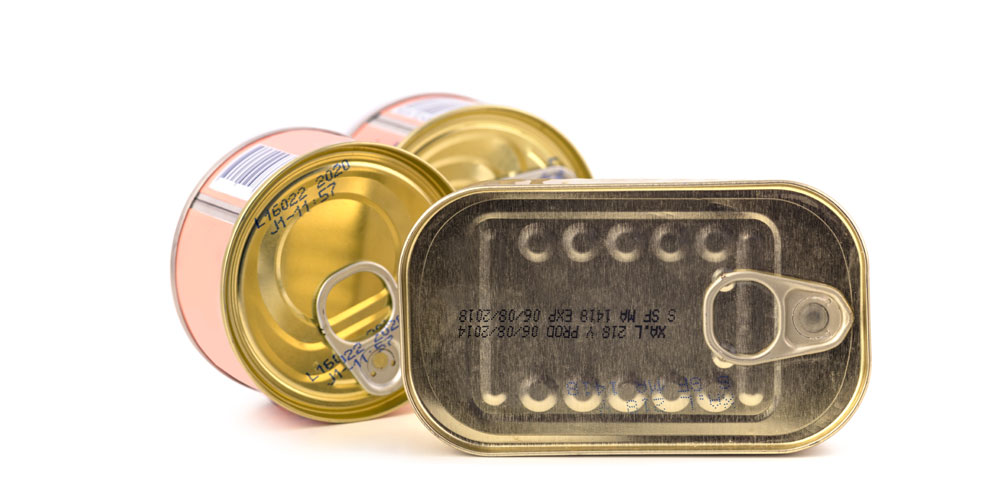
- Metal cans and caps (e.g. craft beer)
- Tin cans, aluminum bottles
- Kitchen appliances and utensils
- Furniture and industrial design components
- Metal helmets, locks, handles
- Electrical boxes and control panels
- Industrial batteries and accumulators
Advantages in the sector:
Mass customization, resistance to chemical and environmental agents, legibility over time.
Defense, weapons and security sector
In this sector, laser marking performs mandatory identification and registration functions, ensuring wear resistance and regulatory compliance.
Markable products:
- Firearm barrels and frames
- Tactical knives and field tools
- Metal shields, armor, helmets
- Invisible UV serial codes
- Parts for military drones and communications devices
- Optics, mounts and ballistic accessories
Advantages in the sector:
Non-alterable markings, visibility even with night vision, NATO or EU standard.

Integration of metal laser markers into the production line
Implementing metal laser marking in production is not a simple “purchase of a machine”, but involves an integration process involving layout , automation , software , safety and personnel training.
Laser technology is flexible and modular : it can be installed in- line , off-line or stand-alone , depending on the level of automation , product type, production rate and traceability requirements . This makes it ideal for both large industries with continuous lines and for SMEs with made-to-order production or variable batches.
Operational integration mode
A) Inline integration
Marking occurs during the production cycle, without interrupting the flow. The laser is positioned on a robotic station or along an automated conveyor line.
Application examples:
- VIN code marking on moving car chassis
- Etching Data Matrix codes on electronic components on SMT tape
- Batch codes on metal caps during packaging
- Continuous marking of steel pipes or profiles before cutting
B) Off-line stations or robotic islands
Marking takes place outside the main line, in a dedicated station . It is ideal for companies with medium-small batches or who need to process very heterogeneous products.
Application examples:
- Mechanical workshops that mark components to order
- Robotic islands with manipulator that manages the loading/unloading of pieces
- Production of medical instruments where marking follows quality control
C) Stand-alone workstations (countertop or compact)
They are positions semi-automated, often manned by a operator. Ideal for customized productions, prototyping, third-party marking centers.
Application examples:
- Customization of jewelry or watches
- Marking of hand tools for identification
- R&D applications, laboratories, sample production
Components of an integrated laser system:
Management software
Almost all industrial lasers today are equipped with software that manages:
- Graphic layout of the marking (texts, QR, logos)
- Automatic databases (for serials, batches, timestamps)
- Connection with ERP, MES or SCADA systems
- Adjustable laser parameters for each material
Machine Vision Systems
They allow you to:
- Check the correctness and legibility of the marking
- Measure position for automatic alignment
- Discard non-compliant parts
Robotics and manipulation
The laser can be mounted:
- On anthropomorphic arms to follow complex geometries
- On XYZ slides for three-dimensional markings
- On rotating stations or indexing tables
Laser barriers and protections (class 1)
For use in unconfined environments, it is essential that the laser be contained in a structure that prevents the beam from escaping.
Gradual integration: how to get started without overhauling your system
Many companies fear that introducing lasers will lead to production downtime or significant investments. In reality, it's possible to proceed in stages:
- Phase 1 – Prototyping and testing: A benchtop machine allows you to test materials, layout, and speed.
- Phase 2 – Offline island: allows you to mark specific batches with trained operators.
- Phase 3 – Inline integration: After validation, the laser is integrated into automatic processes.
This modular approach allows you to reduce risk , evaluate ROI and train staff gradually.

Why investing in laser metal marking technology means investing in the future
Laser marking for metals today represents a strategic investment for many industrial companies. Its ability to combine production efficiency, quality results, and regulatory compliance makes it one of the most reliable technologies for modern manufacturing . Whether you run a mechanical engineering company, a contract manufacturing facility, a medical facility, or an electronics production line, introducing laser marking means increasing competitiveness , enhancing product value , and responding nimbly to market demands.
Every industry has its own specific needs , but whether it's a surgical scalpel, an aerospace valve, an aluminum capsule, or a wedding ring, lasers offer a safe , permanent method that can be seamlessly integrated into the production flow . With good planning and an experienced technical partner like Arca Laser Marking for integration, lasers become a long-term strategic resource, capable of generating value at every stage of the production cycle.
Read also the article: Laser Marking on Plastic: The Definitive Guide